
Why machine vision keeps going blind: the drawer-type FPC retention battle and FC0116's structural reinforcement
In the constant vibration of mowers and robot vacuums, FPC cable slack and cover pop-off can cut the perception link instantly. Why do machine vision and LiDAR trust drawer-type FPCs? CPTGR's FC0116 answers with three changes: a stronger drawer cover, refined end latches and higher cable retention.
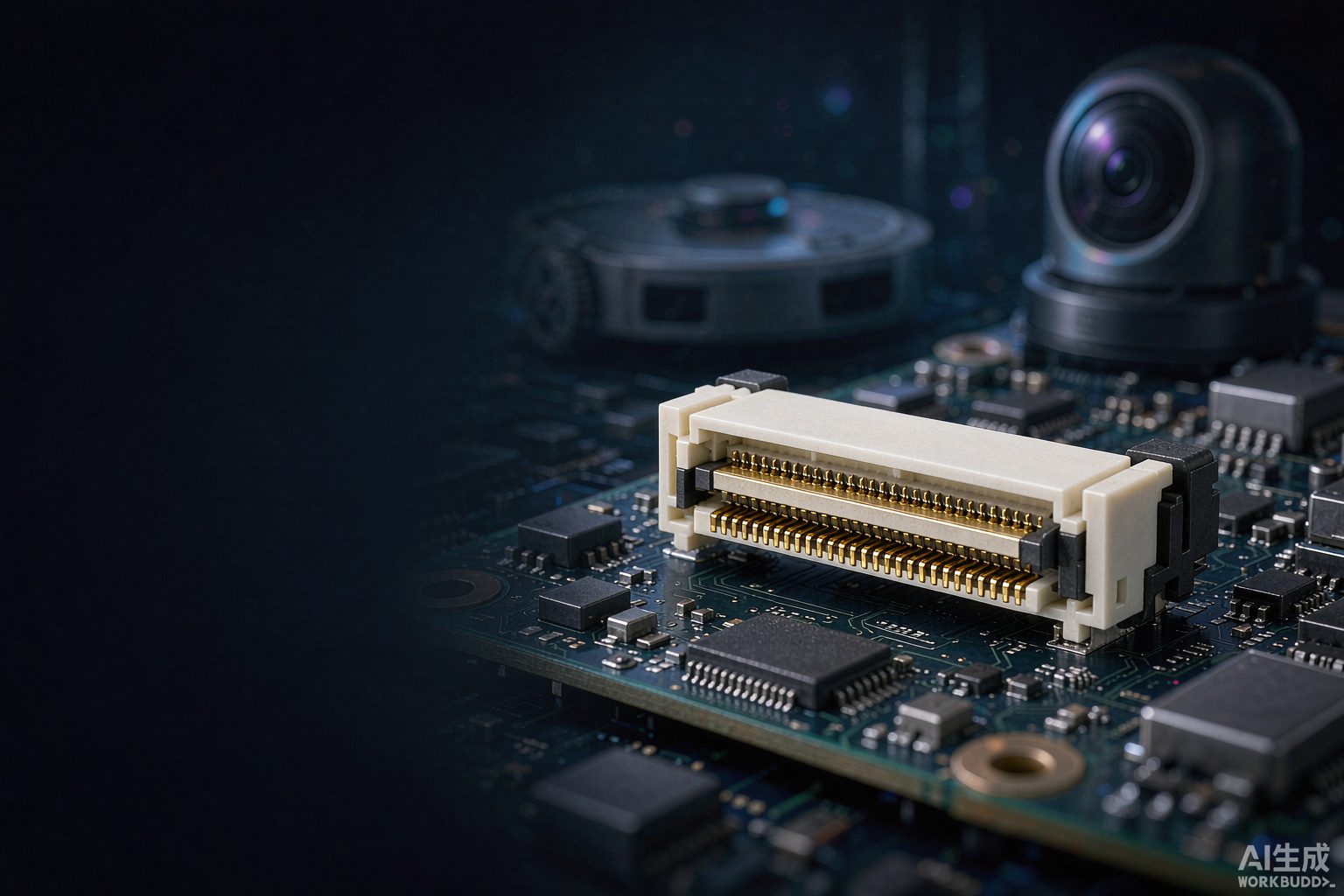
A mower clips a fence, a robot vacuum stalls mid-floor, a LiDAR module drops points — in many such cases the root cause is neither the algorithm nor the sensor, but the FPC cable linking the sensor to the main board. Drawer-type FPC cover pop-off and cable slack are no longer isolated failures: one R&D prototype lost portions of its control-panel keys after vibration testing, with the FPC lifted on teardown; in another project a flip-cover with too little detent force, combined with cable warp stress, popped open under light force. On machines that move, shake and run for hours at a stretch, connector retention is the machine vision's eyesight.
Why machine vision and LiDAR favour the drawer type
Mowers and robot vacuums are among the harshest environments for an FPC connector: high-frequency vibration from blade motors and drive wheels, bumps in travel, grass dust, dew and condensation, and dawn-to-noon temperature swings — hours per run, hundreds of hours per mowing season. Micro-vibration slowly drifts contact resistance, showing up as dropped perception frames, obstacle misjudgement, even full reboots.
Two mainstream latch structures behave very differently under these conditions:
- Flip-cover (hinged): retention comes from deformation of the press-on cover, with stress concentrated at the hinge. Excess opening force can snap the cover; over time the latch loosens and the cover can spring open with the cable lifting — better suited to mild, largely undisturbed assemblies.
- Drawer type (slide / ZIF lock): a horizontal sliding lock forms a mechanical catch; insertion force is smooth, the cable is neither lifted nor the gold fingers pulled, and vibration and pull-out resistance are typically stronger. Clear resistance feedback on full lock also suits repeated mating, repair and after-sales module replacement.
Selection is not about which structure is inherently superior — the machine's lifetime vibration profile and mating frequency set the minimum retention. Perception links such as machine vision and LiDAR, where failure is not an option, naturally converge on the mechanically latched drawer type — the reason drawer FPCs have become mainstream from solid-state LiDAR modules to forward obstacle-avoidance cameras.
A caveat: the drawer type is not universally foolproof
If the lock is not fully seated, retention drops sharply; a lifted cable end, reinforcement too thick or thin, or a reversed contact direction can all create a connection that looks latched but only reveals itself under vibration. Each must be checked against the specific model datasheet.
CPTGR FC0116: three structural reinforcements
For the interconnect needs of robots, LiDAR and camera modules, CPTGR offers the FC0116 series of 0.5mm-pitch ZIF FPC connectors (vertical-mount FC0116R series, full 4–60PIN range, with datasheets, 2D drawings and STEP 3D available for download). To tackle the cover pop-off and slack that plague moving robots, the series makes three structural improvements:
- Stronger drawer cover: the cover body is made thicker and stronger to resist bending and impact, preventing deformation or fracture during handling, assembly and vibration — eliminating the cover itself as a failure point.
- Refined end latches: the two-end catch structure is redesigned for more reliable, evenly distributed engagement, reducing single-side lifting and latch slip with clearer full-lock feedback.
- Higher cable retention: through these structural reinforcements combined with the mechanical catch, overall retention of the FPC is increased to resist vibration and external pull, preventing slack or disengagement while the machine is in motion.
All three changes serve one goal: keeping the perception link stably conductive under vibration so machine vision does not go blind. On manufacturing, FC0116 is an FPC connector built with a mature assembly process — stamped terminals are assembled with the plastic body, drawer slider and other components, and latch reliability is jointly ensured by the latch structure and assembly precision. Unlike board-to-board products that pursue micron-level terminal position accuracy, FPC connector reliability leans more on latch design and cable retention itself — exactly where these three improvements focus.
Typical applications
- Robotic mowers: forward obstacle-avoidance cameras (stereo + ToF fill), solid-state LiDAR modules, flexible breakout from perception daughterboards.
- Robot vacuums: LDS LiDAR, vision obstacle avoidance, display and perception module interconnects.
- Others: cameras, displays and industrial control modules that require repeated mating or operate under vibration.
On a moving machine, connector retention is the machine's eyesight. Rather than chasing mysterious blindness in after-sales, write drawer-cover strength, latch form and cable retention into the specification at selection time. Contact us for FC0116 series datasheets or a footprint-compatible substitution review.
Related product documents
FPC for Robots, LiDAR & Camera Modules
FPC / FFC Connectors · pitch 0.50mm
Send us your stack-up requirement
Share board thickness, available height, channel count and operating environment and we will recommend and quote within 24 hours.